Category Archives: Medical Education

Hints for Anesthesiology Residency Applicants

This post is co-authored by Dr. Kyle Harrison (@KyleHarrisonMD) and has also been featured on CSA Online First.

So, you’ve finished your third year of medical school and have decided that you want to be an anesthesiologist. In our completely biased opinion, you are making the right choice and, at the end of your residency training, you will be in a unique position to enhance the experience and improve the outcomes of patients undergoing surgery and invasive procedures. However, securing a coveted slot in an anesthesiology residency in the United States has never been more competitive. In the many years that we have spent as faculty in academic anesthesiology departments, we have learned a few things about the application process. Our views are our own and do not reflect the official views of any anesthesiology residency program with which we have been affiliated. The following are some (hopefully helpful) answers to common questions that we have been asked over the years.

How High Do My USMLE Score and GPA Have to Be?
Competitive scores are essential. We can’t quote you a number because they vary year to year and program to program, but the trend is only increasing. All medical students, regardless of school, applying in anesthesiology must do well on the USMLE. Think about it — this is the only equalizing factor between schools that teach differently or have different reputations. Having a great score doesn’t guarantee you admission, but if your scores are not competitive, you will have an uphill battle to get a residency slot at a top program. The value of the standardized test score in learning is often debated in academia; however, no one will argue against the conclusion that previous success on standardized tests usually predicts future success on standardized tests. Residency training is demanding. Programs want their residents 100 percent committed and not worrying too much about how they will perform on their annual in-training exams and eventual certification exam.

Do I Need to Have Research Experience?
No program will ever discourage applicants with research experience from applying; we would say that it is not required but is recommended. Don’t do it for the sake of doing it, but definitely do it if you can find a project that you are passionate about. While research in anesthesiology or pain makes sense (shows academic interest in the chosen field), it can really be in any area. It is more impressive to be involved in a project (big or small), see it through, and maybe even present at a meeting or publish in a journal, than to just say you did “research.” If you do list research on your application or curriculum, make sure you can talk about the project, your specific role, and what you learned from it; you will be asked. If you are not interested in research, then consider focusing on another aspect of extracurricular life such as community service.

What Should Be on My List of Extracurricular Activities?
If there is something about you that is really different, it’s helpful to mention it. Again, the application process isn’t perfect, but the file you submit is all the information program coordinators and directors have. If you have done something special — climbed Mt. Everest, set up HIV clinics in Africa, won Olympic medals, had a previous career — or do something noteworthy, such as volunteer extensively in your community, play an instrument, or dance professionally, mention those things. Yes, we have actually seen these applicants (and interviewed them of course)! Selection committee members often apply the “3 a.m. call rule” when reviewing an applicant. This is: Would you like to be on call in the middle of the night with this person? Applicants viewed as hardworking, clinically competent, and interesting to talk to should result in a solid “yes.” If you just like to run in your free time, mentioning that probably doesn’t make a huge difference in the application.

Do I Need to Do an Anesthesiology Rotation?
You should do an anesthesiology rotation at your local institution at the very least. Programs want to know if you understand what you’re getting yourself into. And it does make a difference how well you did on the rotation. Many students approach their anesthesiology rotation as the “intubation and IV insertion” rotation. Most anesthesiologists like us are passionate about their specialty, and the specialty itself in rapidly evolving (familiarize yourself with the Perioperative Surgical Home model). Trust us — we can tell when a student is genuinely interested in anesthesiology, or not. In our experience, medical students who stand out pay attention to what is going on in the perioperative period, anticipate events, know how to be helpful, get involved with the entire patient care episode (starting with the preoperative evaluation, through giving report to the nurse in the recovery room, and even including postoperative follow-up). It is never impressive to see a medical student standing around looking bored. There is always something to do — for example, when a patient arrives in the OR, you can start applying monitors without prompting, or help with positioning. Residents and staff anesthesiologists recognize these things and reward you by getting you more involved with patient care, including procedures.

Who Should Write My Letters of Recommendation?
The dean’s letter is the big one and counts the most. The form of the dean’s letter is usually standardized, so residency program directors have to weed through all the verbiage to get the information they want. It helps when the dean’s letter includes the student’s rank and any special merits (e.g., AOA). Additional letters should be written by faculty members who really know you and can provide helpful content — research mentor, career advisor, staff physician with whom you have worked closely. It doesn’t add strength to an application to have a lot of generic letters (quality over quantity); three strong letters are better than two strong plus three average letters, since the strong letters may get lost in the sea of information in the applicant’s file.

What Else Can I Do to Improve My Chances?
Unfortunately there are no guarantees. The “gatekeeper” is the initial electronic application. With anesthesiology departments receiving hundreds of applications each year, most will sound exactly the same. “I love pharmacology and physiology” (while possibly true for some) only takes you so far. Something unique about the applicant has to come through the pages. Excellent grades and USMLE scores, strong dean’s letter and other recommendations, personal experiences, prior careers, other degrees, thought-provoking research, a list of activities, and a unique personal statement — anything that sets you apart from the pack can make a difference!
Related Posts:

Personalized Medicine: What it Means to be a Physician Anesthesiologist

This post has also been featured on KevinMD.com.

I wear a lot of hats in my job. Though I’m a physician who specializes in the practice of anesthesiology, I don’t spend all day every day at the head of an operating room table.

Many days I spend in an administrative leadership role or conducting research studies. These functions support the best interests of my patients as well as the science and practice of anesthesiology. On my “clinical” days that I spend in hands-on patient care, I provide anesthesia for patients who undergo surgery and other invasive procedures. I also treat acute pain as a consultant. Some of my colleagues in anesthesiology specialize in chronic pain or critical care medicine.

As a medical student, I had a hard time at first understanding what the physician anesthesiologist does. I saw monitors, complicated equipment, and technical procedures that involved a lot of needles. Thankfully, I worked with resident and attending anesthesiologists who inspired me to pursue this specialty.

Anesthesiology is a unique field within medicine. It is at the same time incredibly cerebral and extremely physical. For example, the physician anesthesiologist must be ready to diagnose heart or lung problems that may complicate the patient’s surgery, and decide which medications are appropriate.

Before administering a medication, it’s not enough just to understand the complex pharmacologic effects of the drug and determine the right dose. The anesthesiologist also has to know how to dilute and prepare the drug, the appropriate route for the medication, which other medications are and are not compatible, and how to program the infusion device. In addition, an anesthesiologist has to be technically skilled at finding veins—sometimes in the hand or arm, sometimes leading centrally to the heart—in order to give the medication in the first place.

I am always aware of the trust that patients and their families give me, a total stranger, and I work hard to earn that trust throughout the perioperative period. The job of the physician anesthesiologist is deeply personal. In the operating room, I care for the most vulnerable of patients—those who, while under anesthesia, cannot care for themselves.

– I constantly listen to the sounds of their hearts.
– I breathe for them when they are unable.
– I keep them warm in the cold operating room.
– I provide the fluids that their bodies need.
– I pad their arms and legs and other pressure points.
– I watch the operation step by step, anticipating and responding.
– I learn from their bodies’ response to anesthesia to give the right amount.
– I prevent and relieve their pain.
– I protect them from dangers of which they are unaware.

I have heard people, my colleagues included, compare physician anesthesiologists to pilots. No one claps when the plane lands, just as no one expects any less than a perfect uncomplicated anesthetic every time. We physician anesthesiologists draw great personal satisfaction from doing what we do, and from providing a unique type of personalized medicine. Our patients and their families depend on us to be at our best, always.

Related Posts:

Time to Rethink Preoperative Preparation

The concept of preoperative preparation for patients scheduled for surgery requiring anesthesia is not a new one.  In fact, the idea goes back to Dr. Albert Lee’s description in 1949 (1, 2).  Dr. Lee had observed in his day that patients commonly presented for surgery in various states of poor health; it seemed to make more sense to see these patients before surgery to identify areas of concern early and optimize patients’ conditions they went under the knife.

The model of a stand-alone preoperative evaluation clinic, often run by anesthesiology staff, with a “one stop shop” model for patients’ interviews and examinations, testing, education, and referrals really did not take off until the 1990s (3).  This patient-centered care model was intended to improve efficiency by decreasing the run-around that many patients encountered, but it also saved money for the institution by reducing the ordering of unnecessary tests (4) and decreasing day-of-surgery cancellations (4, 5).

Current State
Current State

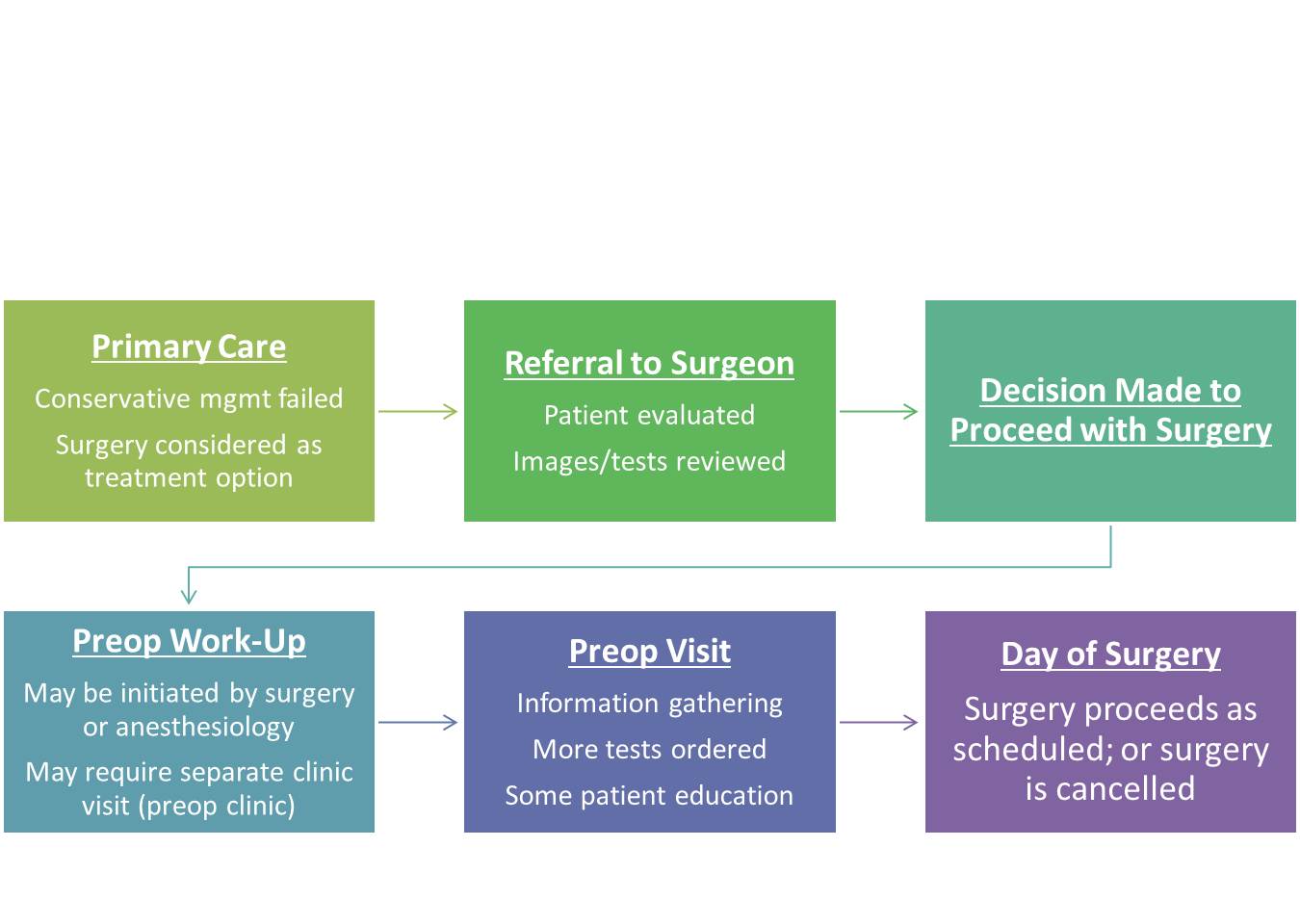
In the present state (assuming an ACO or HMO model), patients are referred to the surgeon by the primary care physician for evaluation of a problem that may be amenable to surgical correction.  If the surgeon deems the patient a surgical candidate, the patient may receive a scheduled date for surgery and then may be referred to the anesthesiology preoperative evaluation clinic (“preop clinic”) for further work-up.  During this encounter, the provider in the preop clinic may request a variety of tests based on the planned surgery and the patient’s comorbid conditions in order to make appropriate recommendations regarding perioperative management to minimize risks.  The American Society of Anesthesiologists (ASA) has published a recent (2012) practice advisory for preanesthesia evaluation to guide this process.

Unfortunately, after nearly 2 decades of employing this model, day of surgery cancellations still occur at various rates around the world.  Some of the reasons are related to factors that preop clinics were meant to avoid:  inadequate preoperative work-up or change in medical condition (6).  Other reasons are patient-driven:  patients’ not showing up (7) or patients’ changing their minds about having surgery (8).  Although not all of these issues are easily solved, it does make me wonder–perhaps it is time for us to rethink the process of preparing patients for surgery.

In our current state, a patient may hypothetically be scheduled for surgery in 8 weeks, a date agreed upon by the patient and surgeon based on available dates.  Even if a preop clinic visit takes place the same day as the surgery clinic visit, this only allows 2 months to optimize a patient’s chronic medical conditions (e.g., hypertension, diabetes, coronary artery disease) that took years to develop.  Imagine if the timeline was even shorter, like 3 weeks.  Add to this time pressure the tremendous physiologic stress that surgery and the subsequent rehabilitation put on the body, and it is not difficult to see why patients can still be cancelled on the day of surgery when they present with abnormal vital signs or test results, making the risks seem too high.  We would not expect ourselves to run a marathon without adequate training and preparation on short notice–why would we do this to our patients having elective surgery?

Future State
Future State

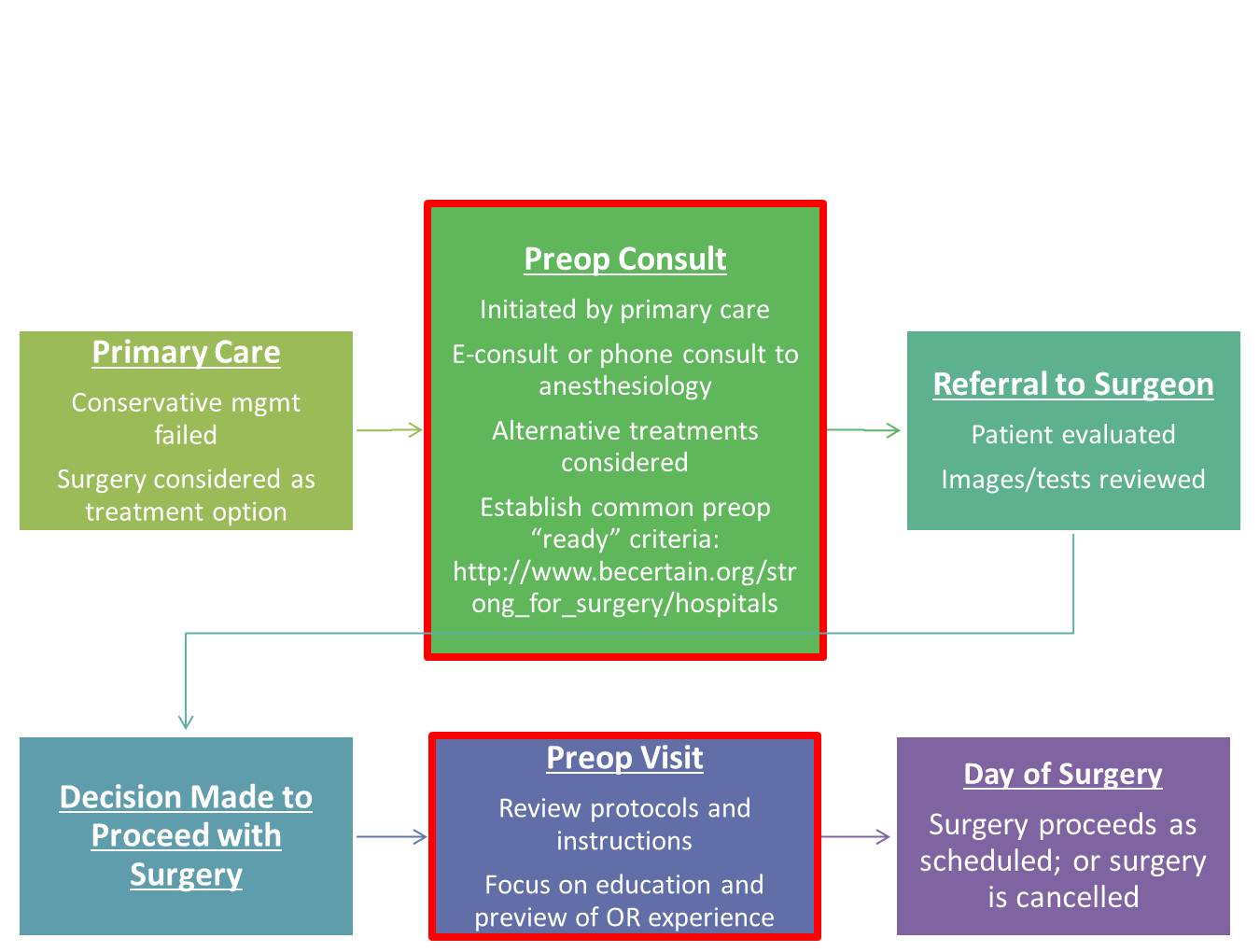
How can we improve preoperative preparation?  I think it still starts with the primary care physician.  With advances in technology such as telemedicine and e-consults (or low-tech phone calls), we have ways to create a direct interface between primary care physicians and anesthesiologists to discuss advanced preparation of patients who may undergo elective surgical procedures.

This coordinated care model is consistent with ASA’s Perioperative Surgical Home.  Early consultation may involve assessment of a patient’s risks and benefits from the procedure, consideration of alternative treatments, and development of a plan to optimize the patient’s comorbid conditions, medication management, and nutrition.  Strong for Surgery is a program that provides patients and clinicians useful checklists based on best-available evidence to guide early preoperative preparation related to smoking cessation, nutrition, glycemic control, and medication management.  For elective surgery, the decision when to refer the patient to a surgeon can be made jointly by the primary care physician and anesthesiologist.  Prior to surgery, the preop clinic visit should still take place, but the focus no longer needs to be on information-gathering and ordering a battery of tests; rather, the goals should be to review pertinent instructions, preview the perioperative experience for patients, and address any logistical or scheduling issues raised by patients to prevent their not showing up or changing their minds at the last minute.  Let’s get started.

For more information, check out this brilliant and inspiring video from the Royal College of Anaesthetists “Perioperative Medicine:  the Pathway to Better Surgical Care.

REFERENCES

  1. Lee JA. The anaesthetic out-patient clinicAnaesthesia. 1949 Oct;4(4):169-74.

  2. Yen C, Tsai M, Macario A. Preoperative evaluation clinicsCurr Opin Anaesthesiol. 2010 Apr;23(2):167-72.

  3. Fischer SP. Cost-effective preoperative evaluation and testingChest. 1999 May;115(5 Suppl):96S-100S.

  4. Fischer SP. Development and effectiveness of an anesthesia preoperative evaluation clinic in a teaching hospitalAnesthesiology. 1996 Jul;85(1):196-206.

  5. Ferschl MB, Tung A, Sweitzer B, Huo D, Glick DB. Preoperative clinic visits reduce operating room cancellations and delaysAnesthesiology. 2005 Oct;103(4):855-9.

  6. Xue W, Yan Z, Barnett R, Fleisher L, Liu R. Dynamics of Elective Case Cancellation for Inpatient and Outpatient in an Academic CenterJ Anesth Clin Res. 2013 May 1;4(5):314.

  7. Kumar R, Gandhi R. Reasons for cancellation of operation on the day of intended surgery in a multidisciplinary 500 bedded hospital. J Anaesthesiol Clin Pharmacol. 2012 Jan;28(1):66-9.

  8. Caesar U, Karlsson J, Olsson LE, Samuelsson K, Hansson-Olofsson E. Incidence and root causes of cancellations for elective orthopaedic procedures: a single center experience of 17,625 consecutive casesPatient Saf Surg. 2014 Jun 2;8:24.

Related Posts:

Why We Need Acute Pain Medicine Specialists

Not all pain is the same.

Chronic pain can be palliated, but “acute” pain (new onset, often with an identifiable cause) must be stamped out. This requires a systems-based approach led by physicians dedicated to understanding acute pain pathophysiology and investigating new ways to treat it. The solution is definitely not giving more and more opioids.

As our understanding of pain mechanisms has evolved, select physicians have developed a special focus on pain in the acute injury/illness and perioperative settings that has led to the rapid advancement of systemic and site-specific interventions to effectively manage this type of pain. Acute pain medicine involves the routine use of multiple modalities concurrently (i.e., multimodal analgesia) in the in-hospital setting to reduce the intensity of acute pain and minimize the development of debilitating persistent pain, a problem that can result from even common surgical procedures or trauma. Unfortunately, the need for specialists in acute pain medicine is increasing.

In December of 2013, I submitted a 161 page letter to the Accreditation Council for Graduate Medical Education (ACGME) requesting that regional anesthesiology and acute pain medicine be considered for fellowship accreditation with the help of my fellowship director colleagues. The Board of Directors of the ACGME informed me this past fall (2014) that they have approved our fellowship to be the next accredited subspecialty within anesthesiology.

Wait – don’t we already have a fellowship program in pain medicine? Yes we do, and this one year post-residency program does include the “Acute Pain Inpatient Experience.” However, this requirement may be satisfied by documented involvement with a minimum of only 50 new patients and is not the primary emphasis of fellowship training in the specialty. Pain medicine is a board-certified subspecialty of anesthesiology, physical medicine and rehabilitation, and psychiatry and neurology; graduates from any of these residency programs can apply to the one year program. In a recent survey study of practicing pain physicians in the United States with added qualification in pain management according to the American Board of Medical Specialties (ABMS), the great majority (83.7%) of respondents defined their practices as following “chronic pain patients longitudinally” (1).

There is clearly room and a need for a subspecialty training program in acute pain medicine that can focus on improving the in-hospital pain experience. Such a program should advance, in a positive and value-added fashion, the present continuum of training in pain medicine.

The Hospital Consumer Assessment of Healthcare Providers and Systems (HCAHPS) survey is administered to a random sample of patients who have received inpatient care and receive government insurance through Center for Medicare and Medicaid Services (CMS). The survey consists of 32 questions and is intended to assess the “patient experience of care” domain in the value-based purchasing program. A hospital’s survey scores are publicly disclosed and make up 30% of the formula used to determine how much of its diagnosis-related group payment withholding will be paid by CMS at the end of each year. Of the 32 questions, 7 directly or indirectly relate to in-hospital pain management.

Why should acute pain medicine be a subspecialty of anesthesiology? Anesthesiology is a hospital-based medical specialty, and anesthesiologists are physicians who focus on the prevention and treatment of pain for their patients who undergo surgery, suffer trauma, or present for childbirth on a daily basis. For more details on the role of the anesthesiologist, please see “Physicians specializing in the patient experience.” Further, history supports the evolution of acute pain medicine through anesthesiology. The concept of an anesthesiology-led acute pain management service was described first in 1988 (2), but arguably the techniques employed in modern acute pain medicine and regional anesthesiology date back to Gaston Labat’s publication of Regional Anesthesia: its Technic and Clinical Application in 1922, with advancement and refinement of this subspecialty in the 1960s and 1970s (3-7).

By the time they complete the core residency in anesthesiology today, not all trainees have gained sufficient clinical experience to provide optimal care for the complete spectrum of issues experienced by patients suffering from acutely painful conditions, including the ability to reliably provide advanced interventional techniques proven to be effective in managing pain in the acute setting (8-12). We need physician leaders who can run acute pain medicine teams and design systems to provide individualized, comprehensive, and timely pain management for both medical and surgical patients in the hospital, expeditiously managing requests for assistance when pain intensity levels exceed those set forth in quality standards, or to prevent pain intensity from reaching such levels. The mission statement for the Acute Pain Medicine Special Interest Group within the American Academy of Pain Medicine provides additional justification.

In a survey of fellowship graduates and academic chairs published in 2005, 61 of 132 of academic chairs responded (46%), noting that future staffing models for their department will likely include an average of 2 additional faculty trained in regional anesthesiology and acute pain medicine (13).

Currently, there are over 60 institutions in the United States and Canada that list themselves as having non-accredited fellowship training programs focused on regional anesthesiology and acute pain medicine on the ASRA website. Since 2002, the group of regional anesthesiology and acute pain medicine fellowship directors has been meeting twice yearly at the ASRA Spring Annual Meeting and ASA Annual Meeting which takes place in the fall. Despite not being an ACGME-accredited fellowship, this group, recognizing the lack of formalized training guidelines, voluntarily began to develop such guidelines as the foundation for subspecialty fellowship training in existing and future programs. These guidelines were originally published in Regional Anesthesia and Pain Medicine in 2005 (14), then were subsequently reviewed, revised, and published as the 2nd edition in 2011 (15), and have been recently updated again (16).

As with other subspecialties, acute pain medicine has emerged due to the need for trained specialists—in this case, those who understand the complicated, multi-faceted disease processes of acute pain, and its potential continuity with chronic pain, and can apply appropriate medical and interventional treatment in a timely fashion. The fellowship-trained regional anesthesiologist and acute pain medicine specialist must be capable of collaborating with other healthcare providers in anesthesiology, surgery, medicine, nursing, pharmacy, physical therapy, and more to establish multidisciplinary programs that add value and improve patient care in the hospital setting and beyond.

REFERENCES

  1. Breuer B, Pappagallo M, Tai JY, Portenoy RK: U.S. board-certified pain physician practices: uniformity and census data of their locations. J Pain 2007; 8: 244-50
  2. Ready LB, Oden R, Chadwick HS, Benedetti C, Rooke GA, Caplan R, Wild LM: Development of an anesthesiology-based postoperative pain management service. Anesthesiology 1988; 68: 100-6
  3. Winnie AP, Ramamurthy S, Durrani Z: The inguinal paravascular technic of lumbar plexus anesthesia: the “3-in-1 block”. Anesth Analg 1973; 52: 989-96
  4. Winnie AP, Collins VJ: The Subclavian Perivascular Technique of Brachial Plexus Anesthesia. Anesthesiology 1964; 25: 353-63
  5. Raj PP, Montgomery SJ, Nettles D, Jenkins MT: Infraclavicular brachial plexus block–a new approach. Anesth Analg 1973; 52: 897-904
  6. Raj PP, Parks RI, Watson TD, Jenkins MT: A new single-position supine approach to sciatic-femoral nerve block. Anesth Analg 1975; 54: 489-93
  7. Raj PP, Rosenblatt R, Miller J, Katz RL, Carden E: Dynamics of local-anesthetic compounds in regional anesthesia. Anesth Analg 1977; 56: 110-7
  8. Buvanendran A, Kroin JS: Multimodal analgesia for controlling acute postoperative pain. Curr Opin Anaesthesiol 2009; 22: 588-93
  9. Hebl JR, Dilger JA, Byer DE, Kopp SL, Stevens SR, Pagnano MW, Hanssen AD, Horlocker TT: A pre-emptive multimodal pathway featuring peripheral nerve block improves perioperative outcomes after major orthopedic surgery. Reg Anesth Pain Med 2008; 33: 510-7
  10. Jin F, Chung F: Multimodal analgesia for postoperative pain control. J Clin Anesth 2001; 13: 524-39
  11. Kehlet H, Dahl JB: The value of “multimodal” or “balanced analgesia” in postoperative pain treatment. Anesth Analg 1993; 77: 1048-56
  12. Young A, Buvanendran A: Recent advances in multimodal analgesia. Anesthesiol Clin 2012; 30: 91-100
  13. Neal JM, Kopacz DJ, Liguori GA, Beckman JD, Hargett MJ: The training and careers of regional anesthesia fellows–1983-2002. Reg Anesth Pain Med 2005; 30: 226-32
  14. Hargett MJ, Beckman JD, Liguori GA, Neal JM: Guidelines for regional anesthesia fellowship training. Reg Anesth Pain Med 2005; 30: 218-25
  15. Guidelines for fellowship training in Regional Anesthesiology and Acute Pain Medicine: Second Edition, 2010. Reg Anesth Pain Med 2011; 36: 282-8
  16. Guidelines for fellowship training in Regional Anesthesiology and Acute Pain Medicine: Third Edition, 2014. Reg Anesth Pain Med 2015; 40: 213-7

Related Posts:

More Journal Club, Less Book Report

When I hear clinical research articles presented for Journal Club, the presentations are sometimes very dry and remind me of book reports–just regurgitating statements made by the authors of the article.  In reality, Journal Club should offer a “deep dive” into study design and scientific methodology.

In the following outline, I suggest a format for evaluating clinical research articles layer by layer.  This can be used by the presenter as well as the discussion moderator to promote a more interactive Journal Club.  Coincidentally, the same format can also be used by journal reviewers and editors when reviewing submitted manuscripts (in other words–this is how I review manuscripts).

Background:  Provide a brief synopsis of preliminary studies cited in the introduction leading up to the present study.

  1. Is the present study justified?  (Should not be lengthy if there is clearly a need for the study)
  2. Do the authors present a hypothesis or hypotheses?
  3. What is the primary aim/objective of the study?  Secondary aims/objectives?

Study Design:  Do the authors explicitly state the design used in the present study?  If so, what is it?

Retrospective (aka “case-control”):  Starts with the outcome then looks back in time for exposure to risk factors or intervention

  1. Can calculate odds ratios to estimate relative risk.
  2. Cannot calculate risk/incidence (not prospective).

Cross-sectional (aka “prevalence study”):  Takes a snapshot of risk factors and outcome of interest at one point in time or over a specific period of time

  1. Can calculate prevalence.
  2. Cannot calculate risk/incidence (not longitudinal).

Prospective (aka “cohort”):  Gold standard for clinical research–may be observational or interventional/experimental (Is it prospectively registered?  Check clinicaltrials.gov)

  • Observational (cohort study)
  1. May or may not have a designated control group (can start with defined group and risk factors are discovered over time such as the Framingham Study).
  2. Can calculate incidence and relative risk for certain risk factors.
  3. Identify causal associations.
  • Interventional/Experimental
  1. What is the intervention or experiment?
  2. Is there blinding?  If so, who is blinded:  single, double, or triple (statistician blinded)?
  3. Are the groups randomized?  How is this performed?
  4. Is there a sample size estimate and what is it based on (alpha and beta error, population mean and SD, expected effect size)?
  5. What are the study groups?  Are the groups independent or related?
  6. Is there a control group–placebo (for efficacy studies) or active comparator (standard of care)?

Measurements:  How are the outcome variables operationalized?  Check the validity, precision, and accuracy of the measurement tools (e.g., survey or measurement scale).

  1. Validity:  Has the tool been used before?  Is it reliable?  Does the tool make sense (face validity)?  Is the tool designed to measure the outcome of interest (construct validity)?
  2. Precision:  Does the tool hit the target?
  3. Accuracy:  Are the results reproducible?

Analysis:  What statistical tests are used and are they appropriate?  How do the authors determine statistical significance (p-value or confidence intervals)?  How are the results presented in the paper and are they clear?

  1. Categorical variables with independent groups:  1 outcome and 2 groups = Chi square test (exact tests are used when n<5 in any field); multiple outcomes or multiple groups = Kruskal Wallis (with one-way ANOVA and post-hoc multiple comparisons test (e.g., Tukey-Kramer).
  2. Continuous variables with independent groups:  1 outcome and 2 groups = Student’s t test (if normal distribution) or Mann-Whitney U test (if distribution not normal); multiple outcomes or multiple groups = ANOVA with post-hoc multiple comparisons testing; multiple outcomes and multiple groups = linear regression.
  3. Continuous variables with related groups:  paired t test or repeated-measures ANOVA depending on the number of outcomes and groups.
  4. Are the results statistically significant?  Clinically significant?
  5. Do the results make sense?

Conclusions:  Skip the discussion section of the paper at first and come up with your own conclusions based on the study results; then read what the authors have to say.

  1. Did the authors succeed in proving what they set out to prove?
  2. Read the discussion section.  Do you agree with the authors’ conclusions?
  3. What are possible future studies based on the results of the present study and how would you design the next study?

Related Posts:

Physicians Specializing in the Patient Experience

This post has also been featured on KevinMD.com.

Imagine — where would elective surgery be today if patients still worried about operating rooms exploding or developing liver and kidney failure from anesthesia?

Having major surgery would be a very different experience without anesthesia.  Before the advent of safe anesthesia techniques, the world of surgery was basically limited to amputations and other attempts at life-saving maneuvers.  Dr. Bigelow’s publication describing the safe administration of ether changed everything, and the New England Journal of Medicine called this the most important article in its history.  With this article, the science and clinical practice of anesthesiology, as well as the modern era of surgery, were born.

How is “anesthesiology” different than “anesthesia?”  Anesthesiology is a science like biology or physiology and a field of medicine like cardiology or radiology.  Anesthesia, a word with Greek origin, means “without sensation.”  There are different types of practitioners who can administer anesthesia, but not all of them are anesthesiologists.  The heart of anesthesiology continues to be the patient experience.  As anesthesiologists, we are physicians who specialize in relieving anxiety, preventing and treating pain, preventing and managing complications related to surgery, and improving the outcomes for patients who undergo invasive procedures.  Not only are we clinicians who apply the best available evidence in our patient care practice; we are the physicians and scientists who develop the evidence.  The clinical practice of delivering anesthesia should not take place without the involvement of anesthesiologists.

Often referred to as “going to sleep,” general anesthesia itself is actually not that simple.  In fact, there is a lot of science behind the turning of dials that many patients and providers take for granted.  Anesthetic agents have not always been as safe as they are today, and anesthesiologists were responsible for conducting important research to retire some of the anesthetics that had the potential to cause patients harm.  Thanks to anesthesiologists, we have fast-acting and safe anesthetic gases that have facilitated the evolution of same-day outpatient procedures.

One study that has guided my practice was conducted by my residency advisor, Dr. Alex Macario.  His research team surveyed patients having elective surgery to ask them which adverse effects of anesthesia they wish to avoid most.  The answers are a little surprising.  Two of the top 4 items are nausea and vomiting, with vomiting being #1.  To improve the experience for patients undergoing anesthesia, anesthesiologists have studied medications that prevent nausea and vomiting after surgery and have established practice guidelines to share their recommendations with anesthesia providers and patients everywhere.

My own research has focused on developing safe pain management techniques for patients having surgery that decreases the need for narcotics.  Like other anesthesiologists before me, I have studied target-specific pain relief techniques using local anesthetic nerve blocks that allow patients to recover at home instead of staying in the hospital for pain control after surgery.  What does this mean for you as a patient?  It means sleeping better in your own bed in your own house instead of in the hospital.  It means using less narcotic pain medication and avoiding the side effects like nausea and constipation that come with it.  It means that family members who take care of you at home can do this more easily, and they need to take less time off work.  It means that you as a patient can recover more quickly and get back to doing the things you want to do.

I apply my research results and the results of other anesthesiologists’ research studies to my clinical practice every day.  I don’t pretend to have all the answers, and I am very wary of those who say they do.  Like many of my anesthesiology colleagues, I see potential research questions and opportunities to improve the surgical experience in daily patient care activities, and I am fortunate to work in an environment that supports investigation and inspires innovation.

I have been told that it is difficult sometimes to distinguish an anesthesiologist from other anesthesia providers by what we wear and how we look.  That may be true, but there is something special about how anesthesiologists think — how we perceive clinical information, analyze it, interpret it, and apply it — that patients need to know.

Anesthesiologists, working alone or in a care team model supervising other anesthesia providers, bring their expertise to the bedside to improve the patient experience.  There has been growing pressure recently to abandon the team model and remove the need for nurse anesthetist supervision.  Why are patients and surgeons being forced to choose between having a nurse anesthetist OR an anesthesiologist when they shouldn’t have to?  Given the choice, I think they will choose “AND.”

Related Posts:

What Is Anesthesiology?

Anesthesiology is a specialty of medicine.

Anesthesiologists are physicians who promote patient well-being in and out of the operating room. As a diverse group, we can deliver safe anesthesia care in the operating room and procedural areas using a wide array of state-of-the-art technology, provide medical evaluation and consultation for patients before and after surgery, manage pain conditions resulting from surgery or other injuries in the short- and long-term, and discover safer and more effective ways to care for patients in the field of anesthesiology research.

After college, modern anesthesiologists complete four years of medical school then four years of residency training, and many go on to pursue extra years of fellowship training in pediatric or cardiac anesthesiology, acute or chronic pain medicine, critical care medicine, research, or other specialty fields of perioperative care. Anesthesiologists are specialists in the human condition under stress, mastering the areas of physiology and pharmacology, including the body’s response to potent medications.

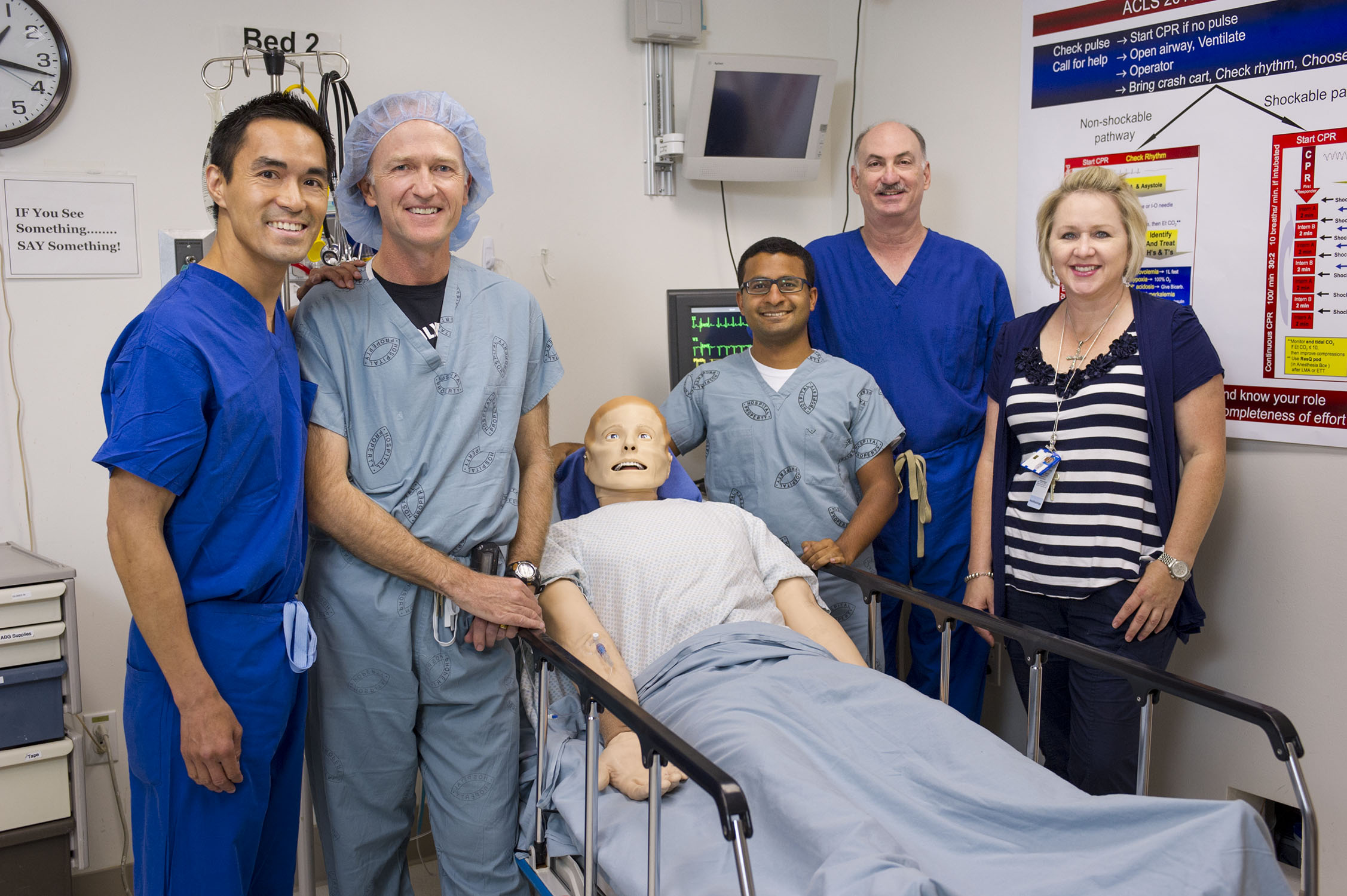
Team5Great strides in patient safety have been made by anesthesiologists. Specifically, the use of life-like patient simulation in the training of new physicians was pioneered by anesthesiologists. Research conducted by anesthesiologists at the VA Palo Alto, in part, led to the replacement of toxic (and occasionally explosive) anesthetic gases with the safe agents we use today.  It is no exaggeration to say that modern surgery would not exist without the incredible advances in anesthesiology.

I am proud to be an anesthesiologist and follow in the footsteps of giants who have come before me. I have the best job in the world:  helping patients through the stressful experience of surgery, relieving pain, and making new discoveries through research that will hopefully benefit future patients.

Related Posts: